
REVIEW · AUSCHWITZ-BIRKENAU MEMORIAL TOURS
Auschwitz – Birkenau from Katowice
Auschwitz asks for your full attention. This five-and-a-half-hour trip from Katowice combines hotel pickup, transport, timed museum entry, and a guided visit to Auschwitz I and Birkenau. I like the smooth door-to-door plan, and I like that admission, headphones, and an English-speaking guide are arranged in advance. The main catch is that pickup times can arrive late, and the two camp visits may feel rushed.
This is not a light sightseeing outing. It is a serious visit to a place of mass murder, with original buildings, objects, photographs, gas chambers, cremation areas, and the Birkenau camp grounds. The guides, including Piotr on some departures, have been praised for clear, heartfelt explanations. Still, the group may include up to 30 people, and there is little time for questions.
You will spend about two hours at Auschwitz I and roughly 60 to 90 minutes at Birkenau, with transport from Katowice on either side. Bring your own water and allow emotional space after the tour. The subject matter is heavy, but the chance to see the preserved sites with a professional guide makes this a valuable and carefully structured day.
In This Review
- Key points to know before booking
- Why this Katowice day trip matters
- Leaving Katowice: pickup and transport
- Auschwitz I: original buildings and permanent exhibits
- Birkenau: scale, silence, and open ground
- Guides, headsets, and group size
- What the $109.33 price includes
- Practical preparation for a difficult day
- Who should book this Auschwitz-Birkenau tour
- Should you book it?
- FAQ
- Where does this Auschwitz-Birkenau tour depart from?
- How long does the tour last?
- How much time do I spend at Auschwitz I?
- How much time do I spend at Birkenau?
- Is admission to Auschwitz-Birkenau included?
- Is the tour conducted in English?
- Is bottled water included?
- Do I need identification?
- Can I cancel or change the booking?
Key points to know before booking
- Pickup from Katowice: Hotel pickup is offered, with a central meeting point at Mariacka 11 for Airbnb stays and private apartments.
- Two separate camp sites: You visit the original buildings and permanent exhibition at Auschwitz I, then the larger Birkenau grounds and key surviving objects.
- Timed museum entry: A skip-the-line ticket helps you avoid arranging admission on your own, though you still need to follow the museum schedule.
- English guided visit: Headphones and an audio receiver are supplied for the guide, which helps in a group of up to 30 people.
- About $109.33 per person: The price includes transport, admission, guide services, water according to the tour details, and taxes, but not lunch.
- Bring identification: An ID card or passport is required, and the experience cannot normally be changed or refunded after booking.
Why this Katowice day trip matters
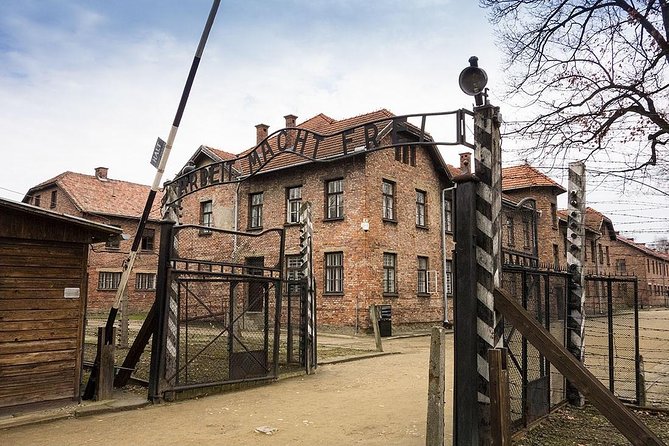
Auschwitz-Birkenau is not simply a museum stop to check off. The visit brings you into original camp buildings and preserved grounds connected to the Holocaust. The permanent exhibition at Auschwitz I gives the visit its human scale, while Birkenau shows the vast physical size of the killing center.
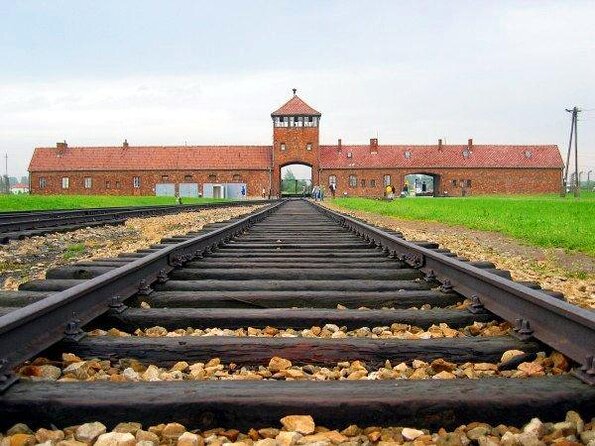
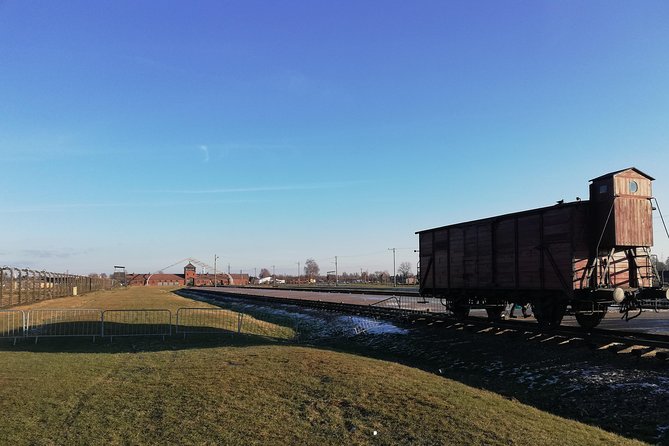
I find the two-part format useful because each site tells a different part of the story. Auschwitz I has brick buildings, rooms, photographs, and displayed objects. Birkenau opens out into a much larger area, with the railway entrance, barracks, ruins, and memorial spaces. Seeing both is important, even though the schedule leaves little spare time.
The tour also provides structure at a place where wandering alone can be difficult. A trained museum guide explains what you are seeing and places the buildings and objects in context. Headphones and receivers mean you can hear the guide while moving through a group.
The emotional weight is unavoidable. Several accounts describe the visit as harrowing, visceral, and necessary. That is the right frame of mind. You should not expect cheerful commentary, free time for casual photos, or a relaxed day out. You are going to learn, remember, and bear witness.
More Auschwitz-Birkenau memorial tours:
- From Krakow: Auschwitz-Birkenau Guided Tour & Hotel Pickup
★ 4.5 · 33,358 reviews - From Krakow: Auschwitz-Birkenau Guided Tour & Hotel Pickup
★ 4.5 · 29,340 reviews - Krakow: Auschwitz Guided Tour with Optional Hotel Pickup
★ 4.5 · 15,280 reviews
Leaving Katowice: pickup and transport
The tour offers pickup from your hotel in Katowice and transport to and from the memorial. If you are staying in an Airbnb or private apartment, the stated meeting point is the Silesia Trip & Hotels office at Mariacka 11 Street.
This arrangement is one of the tour’s strongest practical features. You do not need to work out separate train or bus connections, find parking, or buy museum admission independently. The air-conditioned vehicle takes care of the long transfer between Katowice and the memorial.
The transport service has generally been praised for prompt drivers and helpful coordination. Kamila, named in several accounts, was described as a friendly and careful driver. One driver even called when a passenger became lost in Katowice, while another helped locate a poncho during rainy weather. Those small acts matter when you are trying to make a fixed museum time.
But confirm your pickup time directly. The confirmation process has caused confusion, with some people receiving unclear or late departure information. Museum scheduling can change, and the operator may need to adjust the start time. Contact the company if the pickup hour is missing, rather than guessing or arriving at a meeting point hours early.
The total duration is listed at about five hours and 30 minutes, while the museum visit itself lasts about five to six hours in the detailed schedule. Treat the timing as approximate. Road conditions, entry procedures, and museum scheduling can affect the day.
Auschwitz I: original buildings and permanent exhibits
The first part of the visit takes place at the Main Camp, commonly called Auschwitz I. You spend around two hours here, following a professional museum guide through original buildings and the permanent exhibition.
This section usually feels more confined and personal than Birkenau. The buildings contain photographs, written records, and objects left behind by people who were deported to the camps. The subject matter is painful, and the displays are meant to be approached with respect rather than hurried curiosity.
The tour includes the museum admission and a skip-the-line entry arrangement. That is important because Auschwitz has controlled entry and fixed tours. You are not simply turning up and walking through at your own pace. The operator coordinates your admission and connects you with an English-speaking guide.
The guide’s skill makes a major difference here. Piotr has been praised for combining political and social context with accounts of daily life in the camp. His work with survivors over a number of years was also noted, giving his explanations a personal sense of care without pretending to have lived through the events himself.
The tradeoff is pace. A two-hour visit can cover a great deal, but it does not leave much room to stop, reflect, or ask detailed questions. One account described the group as structured and somewhat rushed, especially with 24 to 30 people moving through busy museum spaces.
You may take photographs within the museum, but that permission should never be mistaken for casual freedom. Follow the guide and museum rules. In some areas, the most respectful choice may be to put the camera away and listen.
Birkenau: scale, silence, and open ground
After Auschwitz I, the tour continues to Birkenau, often called Auschwitz II. The second section lasts about one hour to 90 minutes, depending on the schedule. You see the most important original objects and the broad camp grounds, including surviving structures and memorial areas.
Birkenau changes the character of the visit. Auschwitz I helps you understand individual lives and the machinery of persecution through buildings and objects. Birkenau shows scale. The open grounds, long lines of barracks, railway area, and ruined structures make the size of the operation easier to grasp.
The guide continues with the group at Birkenau, but the guided portion may be closer to 60 minutes. A free shuttle between the two camp sites runs every 15 minutes, and you may be able to remain at Birkenau after the formal guided portion if the day’s transport plan allows it. Confirm this with your driver or coordinator before separating from the group.
That point is worth taking seriously. One person was mistakenly directed back toward the vehicle after Auschwitz I and missed the guided portion at Birkenau. The driver corrected the error, but the group had already moved on. If you are told to return to the car, ask clearly whether you are being taken to Birkenau or back to Katowice.
Do not assume the second site will be fully explained through signs alone. The site can be visited independently, but you may miss important context without the guide. If you want time to look around by yourself, ask in advance how much free time is available and where you should meet the driver.
A few more in Krakow
- Krakow–Zakopane: Cable Car, Chocholow Baths, Cheese & Vodka
★ 5.0 · 10,720 reviews - Krakow: Auschwitz-Birkenau Guided Tour with Pickup & Lunch
★ 4.5 · 9,800 reviews - From Krakow: Wieliczka Salt Mine Tour
★ 4.6 · 9,393 reviews - Krakow: Auschwitz-Birkenau Guided Tour Pickup/Lunch Options
★ 4.5 · 9,057 reviews
Guides, headsets, and group size
An English-speaking museum guide leads the site visit, and the tour supplies an audio receiver and headphones. This is not the same as an individual audio guide that lets you set your own pace. Instead, the equipment carries the live guide’s voice to you as the group moves.
That setup is helpful in crowded rooms and outdoors. You can stay a little behind without losing every word. It also means the guide can keep a steady pace without shouting.
The maximum group size is 30 people. That is not a private tour, and you should expect a formal group route. The upside is a lower price than a private guide and a clear plan. The downside is less flexibility and fewer chances to ask questions.
Guides have been described as professional, friendly, and well informed. Piotr received especially warm praise for his depth and thoughtful presentation. Another account found the guide overly dramatic, which is a reminder that tone can vary. At a site this serious, a calm and respectful guide is more useful than theatrical delivery.
I recommend doing some reading before you go. The tour gives you essential information, but the amount of detail is limited by time and group movement. Even a basic understanding of the Holocaust and the camp system will help you make sense of the exhibits without asking the guide to explain every term from the beginning.
What the $109.33 price includes
At about $109.33 per person, this is not the cheapest possible way to reach Auschwitz. The value comes from convenience and coordination rather than luxury.
Your fee includes:
- Hotel pickup in Katowice, where available
- Transport in an air-conditioned vehicle
- Museum admission and applicable taxes
- A professional guided visit
- Audio receivers and headphones
- Bottled water, according to the stated inclusions
Lunch is not included. The schedule is long enough that you should eat beforehand and bring a snack if permitted. You should also carry your own water, since two people specifically found that water was not offered despite its inclusion in the tour details.
For many people, the price is reasonable because it removes several points of stress. You do not need to arrange a separate transfer, find the correct entrance, or work out how to join a museum group. The operator also waits during the visit and takes you back to your pickup point.
The value drops if you expect a private experience, extensive free time, or a guide who can answer every question at length. A group of up to 30, a fixed route, and a short Birkenau visit are part of the bargain.
Practical preparation for a difficult day
Wear practical clothing and shoes. The tour involves walking through museum buildings and open camp grounds, and the exact amount of walking and number of breaks are not clearly specified. Plan for a substantial period on your feet.
Weather matters. The experience requires good weather, and poor conditions may lead to a different date or a full refund if the operator cancels. Even in suitable weather, Birkenau is exposed, so take sensible outdoor clothing.
Carry your passport or ID card. Identification is required for the visit. Keep it accessible rather than buried in luggage.
You are allowed to take photographs within the museum, but behave carefully. This is a memorial and former killing site, not an ordinary attraction. Listen to instructions about where photography is permitted and keep the tone respectful.
Allow yourself a quiet period after returning to Katowice. The day can leave you unsettled. The point is not to rush from the memorial straight into another busy activity.
The tour is offered in English. Confirmation is normally sent within 48 hours of booking, subject to availability, but the pickup time may need separate confirmation. The experience is non-refundable and cannot be changed for personal reasons, so book only when your schedule is firm.
Who should book this Auschwitz-Birkenau tour
I would choose this tour if you are staying in Katowice and want the simplest organized route to both sites. It suits first-time visitors who prefer transport, admission, and a museum guide handled in one booking.
It is also a good fit if you are nervous about reaching the memorial on time. The driver and tour coordinator handle the main connections, and the museum entry is arranged in advance. The strongest praise goes to the coordination, punctual pickups, and helpful drivers.
You may prefer another option if you want a private guide, a slower visit, or a large amount of time for personal reflection. The two hours at Auschwitz I and roughly one hour at Birkenau provide a meaningful introduction, but they can feel compressed.
If you are traveling during a busy holiday period, this organized arrangement may be especially useful. Admission can be tightly controlled, and the operator’s ability to coordinate changes can save the day. Still, confirm every time and meeting instruction in writing.
Should you book it?
Yes, if your priority is a practical, guided visit to both Auschwitz and Birkenau from Katowice. The transport, timed entry, English guide, and included equipment make a difficult day easier to manage. The experience is serious, well structured, and widely praised for its drivers and museum guides, especially Piotr and Kamila.
Book with realistic expectations. The group may be large, water may not be supplied despite the stated inclusion, and the schedule leaves limited time for questions or independent wandering. Confirm pickup details, bring identification and your own water, and stay with the group when moving between the two sites.
For a first visit, the convenience is worth the price. You will not see everything, but you will see the two places that matter most, with enough guidance to understand why they must be remembered.
FAQ
Where does this Auschwitz-Birkenau tour depart from?
Pickup is offered from hotels in Katowice. For Airbnb stays, private apartments, and similar accommodation, the stated meeting point is the Silesia Trip & Hotels office at Mariacka 11 Street.
How long does the tour last?
The advertised duration is about five hours and 30 minutes. The detailed schedule describes a total camp visit of about five to six hours, so you should treat the timing as approximate.
How much time do I spend at Auschwitz I?
You spend around two hours at the Main Camp, Auschwitz I, visiting the permanent exhibition and original buildings with a professional guide.
How much time do I spend at Birkenau?
You spend about one hour to 90 minutes at Birkenau, visiting important original objects and areas of the former camp.
Is admission to Auschwitz-Birkenau included?
Yes. Museum admission, fees, and taxes are included, and the tour provides a skip-the-line ticket arrangement.
Is the tour conducted in English?
Yes. The tour is offered in English, with a professional museum guide and supplied audio receivers and headphones.
Is bottled water included?
Bottled water is listed as included, but it may not always be offered. Bringing your own water is a sensible precaution.
Do I need identification?
Yes. An ID card or passport is required for the visit.
Can I cancel or change the booking?
The experience is non-refundable and cannot be changed for personal reasons. If the operator cancels because of poor weather, you will be offered another date or a full refund.
Just added in Krakow
- Auschwitz-Birkenau – Skip the Line Tickets★ 3.5 · 29 reviews
- Auschwitz-Birkenau: Fast-Track Ticket & Guided Tour No Transfers★ 3.5 · 17 reviews
- Zakopane & Sleigh Ride with Bonfire – Group Tour from Kraków★ 5.0 · 2 reviews
- Sleigh Ride & Bonfire in Zakopane with Funicular – Private Trip★ 5.0 · 48 reviews
- Thermal Baths & Zakopane – Private Trip from Krakow★ 5.0 · 1 review
- Zakopane & Gubalowka Funicular – Private Winter Tour from Krakow★ 5.0 · 10 reviews
- stag dog chase Krakow prank★ 5.0 · 4 reviews
- Divine Mercy Sanctuary – Private Tour from Krakow★ 5.0 · 4 reviews