
REVIEW · MUSEUMS IN KRAKóW
Archaeological Museum of Krakow Entrance Ticket
Krakow’s oldest stories are below street level. I like this ticket for two clear reasons: it brings you face to face with the unusual four-faced Światowid statue, and it covers archaeological sites tied to Krakow, St. Wojciech’s Church, and Nowa Huta. The price is also remarkably low at about $2.13 per person.
The main catch is practical rather than cultural. This is an entrance ticket, not a guided tour, and one booking has already run into trouble when no QR code arrived and the ticket office refused entry. I would confirm that your ticket is delivered before heading over, especially if you are relying on a phone voucher.
In This Review
- Key points to know before you go
- A museum built inside St. Michael’s former prison
- Meeting Światowid, the four-faced pagan god
- St. Wojciech’s Church beneath Krakow’s Main Square
- Nowa Huta-Branice and the archaeology of a changing district
- What the one or two day ticket really offers
- Is $2.13 good value?
- The ticket problem you should take seriously
- Who will enjoy this museum most?
- Should you book the Archaeological Museum ticket?
- FAQ
- Where is the Archaeological Museum located?
- What is the main attraction?
- Does the ticket include a guide?
- How long is the ticket valid?
- Can I visit St. Wojciech’s Church with this ticket?
- What can I see beneath St. Wojciech’s Church?
- What is special about the Nowa Huta-Branice branch?
- How late can I enter?
- Is entrance free with a Krakow City Card?
- Can I cancel the ticket?
Key points to know before you go
- Światowid is the star: See a 9th or 10th century pagan statue with four faces, found in 1848 in Zbrucz.
- The main museum has a complicated past: The building once belonged to the Barefoot Carmelites, later became St. Michael’s Prison, and now holds archaeological collections.
- Three museum locations are connected: The ticket information includes the main museum, St. Wojciech’s Church beneath Krakow’s Main Square, and the Nowa Huta-Branice branch.
- You explore without a guide: The ticket covers entry only, so plan to read displays and move at your own pace.
- The ticket is valid for one or two days: Check the option and starting time when booking, since the exact period depends on availability.
- Last entry is 90 minutes before closing: Opening hours can change, so check the museum’s official website on the day of your visit.
A museum built inside St. Michael’s former prison
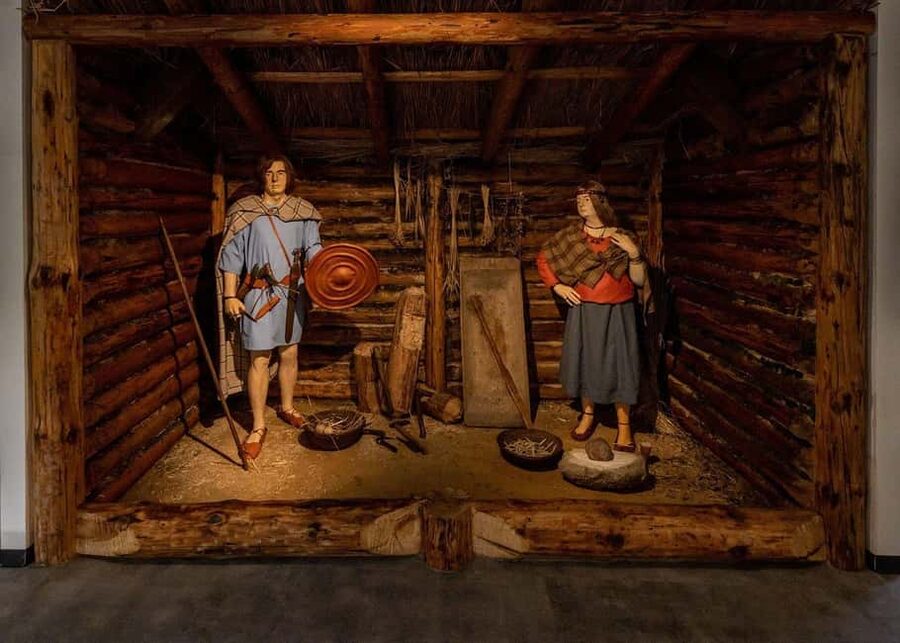
The Archaeological Museum occupies a building with an unusually tangled past. For decades, it served as the monastery of St. Michael, home to the Barefoot Carmelites. In the 19th century, the Austrians stationed in Krakow changed its purpose completely and turned it into a prison.
The prison kept the monastery’s old name and became known as St. Michael’s Prison. After World War II, the prison closed, and the building gained a new role as Krakow’s Archaeological Museum. That sequence gives the visit extra weight. You are not simply walking into a display hall. You are entering a place that has served religious, military, penal, and cultural purposes.
I like museums that make their own walls part of the story, and this one does. The building’s past gives you a useful frame for the objects inside. Krakow’s history is not presented as one neat timeline. It is layered, interrupted, and often repurposed.
The ticket itself does not include a guide. That keeps the price low, but it also means you need to give yourself time to read the displays and connect the pieces. If you prefer a fast visit with a guide explaining every object, this may feel too independent. If you enjoy setting your own pace, the format is easy to manage.
More Museums in Kraków
- Auschwitz-Birkenau Museum and Memorial Guided Tour from Krakow
★ 4.5 · 1,510 reviews - Krakow: Rynek Underground Museum Guided Tour
★ 4.6 · 1,122 reviews - Krakow Schindler’s Factory Museum Guided Tour in English
★ 4.5 · 650 reviews
Meeting Światowid, the four-faced pagan god
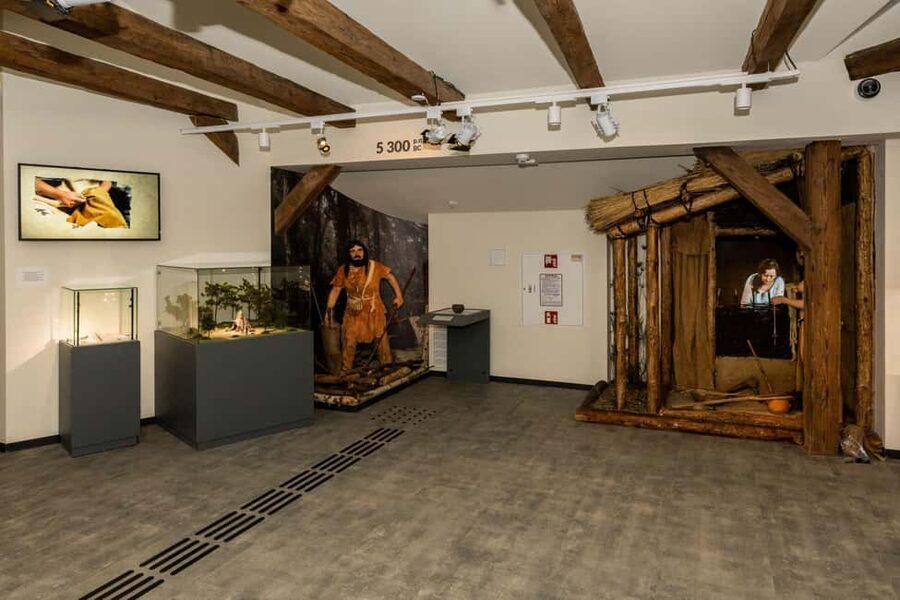
The museum’s most famous object is the statue of Światowid, a pagan god with four faces. It dates from the 9th or 10th century and was found in 1848 in Zbrucz.
This is the object to build your visit around. The statue offers a direct look at religious beliefs from before the spread of Christianity in the region. Its four faces give it an unusual presence, and the subject makes it more than a standard medieval sculpture. You are looking at a surviving piece of pagan belief, not simply a decorative work of art.
The museum presents this collection as a journey into the period of pagan religions. That makes the visit useful even if you know little about early Polish archaeology. Światowid gives you a clear starting point, then the other objects help place it within a wider story from Lesser Poland.
I would not expect a single statue to fill an entire afternoon. Its value is in the context around it. Give yourself time to consider what the figure tells you about local beliefs, and then look at the other archaeological finds rather than rushing straight out after seeing the main attraction.
St. Wojciech’s Church beneath Krakow’s Main Square
One branch is located at St. Wojciech’s Church on Krakow’s Main Square. Beneath the church, an underground exhibition explains the history of the square, the church, and its patron, Saint Wojciech.
This stop is especially convenient if you are already sightseeing around the center. You do not need to make a separate trip across the city just to find it. The underground setting also changes how you read Krakow’s past. Instead of seeing only the present-day square above, you can look at the remains hidden beneath it.
The exhibition includes remnants of wooden and stone floors, along with Romanesque walls. These are the kind of remains that help you understand how much of Krakow lies below the modern surface. The displays are not only about religious history. They also show how the square and its buildings changed over time.
I would plan this branch around your time in the Main Square rather than treating it as a long stand-alone museum visit. It can work well before or after other central sights. Since the ticket is valid for one or two days, you may have more freedom to split the locations instead of forcing them all into one packed schedule.
The underground branch also gives you a good contrast with the main museum. The central site is tied closely to the city’s medieval religious and urban past. The main building focuses more broadly on archaeology and pagan-era material.
Nowa Huta-Branice and the archaeology of a changing district
The second branch is Nowa Huta-Branice. It is closely connected with the Nowa Huta district and its metallurgical plant. Archaeological work in the area began in 1949 during the first construction projects.
That date matters. The discoveries were not made in a quiet, untouched setting. They came to light as a major modern district and industrial complex were being built. The branch therefore links archaeology with the physical growth of postwar Krakow.
You may find this location most appealing if you want to see a side of Krakow beyond the historic center. The Main Square and old churches tell one part of the city’s story. Nowa Huta-Branice shows how archaeological remains can appear during modern construction and then reshape what we know about a region.
The supplied information does not give a detailed list of individual objects at this branch, so I would avoid expecting a specific famous exhibit beyond the wider archaeological collection. Its strength is the connection between the finds and Nowa Huta’s development.
The location also requires more planning than the Main Square branch. The meeting point can vary depending on the option booked, and exact opening hours may change. Check the current details before setting out, especially if you are trying to visit all three locations in one day.
Something quite different:
- From Krakow: Auschwitz-Birkenau Guided Tour & Hotel Pickup
★ 4.5 · 33,358 reviews - From Krakow: Auschwitz-Birkenau Guided Tour & Hotel Pickup
★ 4.5 · 29,340 reviews - Krakow: Auschwitz Guided Tour with Optional Hotel Pickup
★ 4.5 · 15,280 reviews - Krakow–Zakopane: Cable Car, Chocholow Baths, Cheese & Vodka
★ 5.0 · 10,720 reviews
What the one or two day ticket really offers
The ticket is valid for one or two days, depending on the option and availability. That flexibility is useful because the museum’s sites are not all gathered in one building.
You could use one day for the main museum and St. Wojciech’s Church, then visit Nowa Huta-Branice on the second day if your selected ticket allows it. This is a better plan than racing between locations, particularly if you want to combine the central branch with other sights around Krakow’s Main Square.
The timing information is not completely fixed. You need to check the available starting times and the exact validity period before booking. Opening hours may also differ from those shown when you first look, so the museum’s official website is the safest place to confirm the schedule.
Keep the 90-minute last-entry rule in mind. A low ticket price does not help if you arrive too late to get inside. I would aim to arrive well before the final admission time, giving yourself room for a delayed tram, a wrong turn, or a queue at the entrance.
There are no guide services included. You are buying access, not a tour group experience. That is a benefit for people who dislike fixed commentary and want to linger over the Światowid statue. It is less helpful if you want the history explained as you move through each room.
Is $2.13 good value?
At roughly $2.13 per person, this is one of the easiest cultural purchases in Krakow to justify. The price is low enough that even a short visit can feel worthwhile, especially if you are already near the main museum or St. Wojciech’s Church.
The value improves if you use the ticket across more than one site. Seeing the main museum, the underground church exhibition, and Nowa Huta-Branice gives you three different angles on Lesser Poland’s archaeology. One focuses on the museum’s unusual building and pagan material, one on Krakow’s central religious and urban past, and one on archaeological finds linked with postwar construction.
The value is weaker if you only want a guided explanation or a large art collection. This is not a substitute for a tour with a specialist. It is also not the best choice for someone who has only a few minutes and expects a single spectacular room.
If you hold a Krakow City Card, entrance is free. In that case, compare the card’s other benefits before purchasing this separate ticket. The city card may already cover the Archaeological Museum’s main building and both listed branches.
The ticket problem you should take seriously
There is one important warning. A ticket did not arrive for one booking, and the ticket office would not allow entry without a QR code.
That is not a minor inconvenience. For a museum ticket, the QR code is the practical key to the door. I would check your email, app, and booking account before leaving your accommodation. If the code is missing, contact the provider promptly rather than waiting until you reach the museum.
The experience allows cancellation up to 24 hours in advance for a full refund. That gives you some protection if your plans change, but it does not solve a same-day ticket delivery problem. Save the booking confirmation and make sure you know which location your chosen option covers.
Smoking, alcohol, and drugs are not allowed. These are standard restrictions, but they are worth noting because the ticket covers museum and church settings.
Who will enjoy this museum most?
I would recommend this experience to you if you enjoy archaeology, early religious history, and unusual museum buildings. The Światowid statue gives the visit a strong focal point, while the three locations let you see how archaeology connects with both old Krakow and modern Nowa Huta.
It also suits independent sightseers. You can explore without being tied to a guide or a group schedule. The one or two day validity may make it easier to fit the museum around other Krakow plans.
Families with older children may find the four-faced statue and former prison setting easier to remember than a long list of dates. Younger children may need help staying interested if they do not already enjoy archaeological displays.
I would be more cautious about booking if you have almost no time in Krakow, dislike self-guided museums, or cannot confirm that your QR ticket has arrived. The low cost reduces the financial risk, but a poorly timed visit can still waste part of your day.
Should you book the Archaeological Museum ticket?
Book it if you want a low-cost look at Krakow beyond royal castles and grand churches. The Światowid statue, the former St. Michael’s Prison, and the underground remains at St. Wojciech’s Church give this experience a clear sense of place.
The best approach is to treat it as a flexible museum pass rather than a formal tour. Check which branches your option includes, confirm current opening hours, and verify the QR code before you go. If you have a Krakow City Card, use that instead of paying separately.
For a little over two dollars, the main museum alone is a sensible choice. With time for all three branches, it becomes a practical way to connect pagan beliefs, medieval Krakow, and the archaeological story of Nowa Huta.
FAQ
Where is the Archaeological Museum located?
The main museum is in the former St. Michael’s Monastery and Prison building in Krakow. The experience also includes branches at St. Wojciech’s Church on the Main Square and Nowa Huta-Branice, depending on the ticket option.
What is the main attraction?
The most famous object is the Światowid statue, a four-faced pagan god dating from the 9th or 10th century. It was found in 1848 in Zbrucz.
Does the ticket include a guide?
No. The ticket includes entrance to the Archaeological Museum, but a guide is not included.
How long is the ticket valid?
The ticket is valid for one or two days, depending on the option available when you book.
Can I visit St. Wojciech’s Church with this ticket?
The ticket information includes the underground exhibition at St. Wojciech’s Church on Krakow’s Main Square. Check your selected option to confirm the sites covered.
What can I see beneath St. Wojciech’s Church?
The underground exhibition presents the history of the Main Square, the church, and Saint Wojciech. You can see remnants of wooden and stone floors and Romanesque walls.
What is special about the Nowa Huta-Branice branch?
This branch is linked with the Nowa Huta district and its metallurgical plant. Archaeological discoveries there began in 1949 during early construction work.
How late can I enter?
The last entrance is 90 minutes before closing. Opening hours may change, so check the local operator’s official website for current times.
Is entrance free with a Krakow City Card?
Yes. Holders of the Krakow City Card can enter free of charge.
Can I cancel the ticket?
Yes. You can cancel up to 24 hours in advance for a full refund.
Just added in Kraków
- Auschwitz-Birkenau – Skip the Line Tickets★ 3.5 · 29 reviews
- Auschwitz-Birkenau: Fast-Track Ticket & Guided Tour No Transfers★ 3.5 · 17 reviews
- Zakopane & Sleigh Ride with Bonfire – Group Tour from Kraków★ 5.0 · 2 reviews
- Sleigh Ride & Bonfire in Zakopane with Funicular – Private Trip★ 5.0 · 48 reviews
- Thermal Baths & Zakopane – Private Trip from Krakow★ 5.0 · 1 review
- Zakopane & Gubalowka Funicular – Private Winter Tour from Krakow★ 5.0 · 10 reviews
- Divine Mercy Sanctuary – Private Tour from Krakow★ 5.0 · 4 reviews
- stag dog chase Krakow prank★ 5.0 · 4 reviews
Museums in Kraków, compared.

Chopin Piano Concert at Chopin Gallery with a Glass of Wine
Read our review →
Czartoryski Museum Tour / Entrance with Krakow Card
Read our review →
Rynek Underground Museum Skip-the-line Guided Tour
Read our review →
Krakow Arcade Museum Entrance Ticket With Free Play
Read our review →
Browse the lists this tour appears in