
REVIEW · AUSCHWITZ-BIRKENAU MEMORIAL TOURS
2-Hour Guided Tour in Kraków-Płaszów Concentration Camp
Memory lives in Kraków’s quietest places. This two-hour walking tour connects Ghetto Heroes Square, the former Płaszów camp, the Liban Quarry replica, and a surviving section of the ghetto wall. I like that it focuses on Kraków’s own Holocaust story instead of treating the city only as a base for Auschwitz. I also like the small group limit of 15 people, which should make it easier to hear the guide and ask questions.
The main consideration is the setting. Płaszów is now a sparsely wooded area of hills and open fields, not a preserved camp with rows of buildings and museum displays. You need to be ready for a serious, partly interpretive visit. The tour begins at 3:00 pm, costs about $23.27 per person, and requires a separate tram ticket costing 3.4 PLN.
In This Review
- Key points before you book
- Why Płaszów matters in Kraków’s story
- Starting at Ghetto Heroes Square
- Walking through the former Płaszów camp
- The memorials and the difficulty of an open site
- Seeing the Schindler’s List connection
- Finishing at the surviving ghetto wall
- What the $23.27 price delivers
- Who will get the most from this tour
- A practical plan for the afternoon
- Should you book the Płaszów camp tour?
- FAQ
- How long is the Płaszów concentration camp tour?
- Where does the tour begin?
- What time does the tour start?
- Where does the tour finish?
- Is transportation included?
- What sites are included?
- How many people can join the tour?
- Can I cancel for a full refund?
Key points before you book
- Three important Kraków sites in two hours: The route links Ghetto Heroes Square, Płaszów, and the remaining ghetto wall.
- Płaszów is mostly open ground today: Expect fields, wooded hills, memorials, and historical explanations rather than preserved barracks.
- The Schindler’s List connection is part of the story: The real camp area and nearby Liban Quarry replica help explain what the film showed.
- A small group of up to 15 people: This is a useful size for a history tour where clear explanations matter.
- The guide is the heart of the experience: The available feedback praises one guide for explaining everything clearly and creating an easygoing afternoon.
- Transport costs extra: The tram ticket is not included, so bring 3.4 PLN in addition to the tour price.
Why Płaszów matters in Kraków’s story
Many people associate Kraków’s wartime history with Oskar Schindler’s factory or with a day trip to Auschwitz. Płaszów gives you a different view. It shows how persecution unfolded inside Kraków itself, after the city’s Jewish residents were forced into the ghetto and later sent onward to camps and killing sites.
Płaszów began receiving thousands of Jews from the Kraków ghetto in 1943. The former camp occupied a large area in what is now the Podgórze district, close to Wielicka Street, the Bonarka shopping center, and Krakus Mound.
That modern setting can feel unsettling. The area is not isolated in the countryside. It is surrounded by normal city life, roads, shops, housing, and public transport. The contrast helps you understand how a site of mass suffering can become easy to overlook once its buildings disappear.
The tour gives you a guide to that difficult ground. Without explanation, you might see only uneven paths, trees, and open spaces. With historical context, the same places become part of a much clearer story about deportation, forced labor, terror, and the destruction of Kraków’s Jewish community.
More Auschwitz-Birkenau memorial tours:
- From Krakow: Auschwitz-Birkenau Guided Tour & Hotel Pickup
★ 4.5 · 33,358 reviews - From Krakow: Auschwitz-Birkenau Guided Tour & Hotel Pickup
★ 4.5 · 29,340 reviews - Krakow: Auschwitz Guided Tour with Optional Hotel Pickup
★ 4.5 · 15,280 reviews
Starting at Ghetto Heroes Square
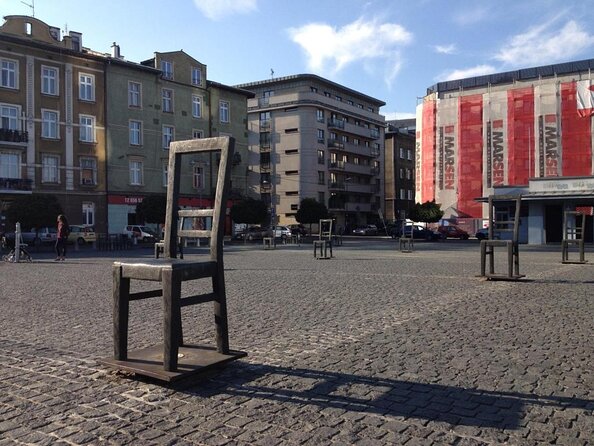
The meeting point is Apteka pod Orłem at Plac Bohaterów Getta 18. The square sits across the river in Podgórze and is one of Kraków’s most affecting memorial spaces.
During the war, this was Plac Zgody, a central point in the Kraków ghetto. After the war, its importance faded for decades. The square was used as a public toilet and parking area before renovation finally began to restore its meaning.
Today, 70 large metal chairs are spread across the square. They represent departure and absence. The design is unusual and spare. It does not try to recreate the past with statues or long explanations. Instead, the empty chairs make you think about the people who left the square and never returned.
Starting here gives the tour a human scale. Płaszów can feel broad and difficult to read. The chairs first remind you that the history was not about an abstract number. It was about families, neighbors, shopkeepers, children, and older people removed from their homes.
Allow a few minutes to look around before the tour begins. The meeting point is easy to identify, and the nearby Apteka pod Orłem is closely tied to the wartime story of the ghetto. The tour information does not include entry to an indoor museum, so you should expect to begin outdoors.
Walking through the former Płaszów camp
The main part of the visit takes place at the former Płaszów camp. The guided section lasts about two hours overall, with the camp itself forming the central stop.
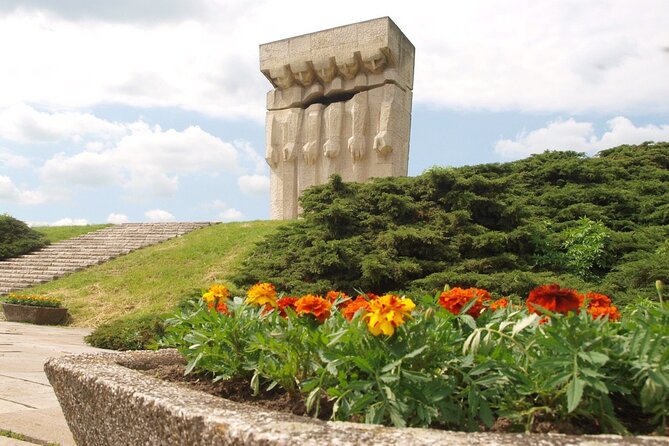
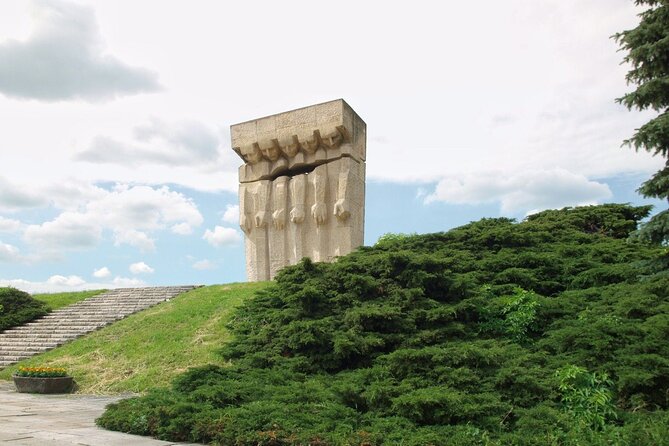
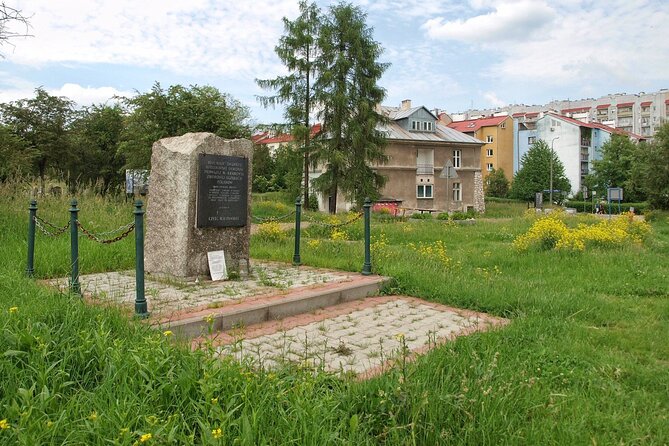
The first thing to understand is what you will not find. Płaszów does not present the intact buildings, fences, and rows of barracks that some people expect from a concentration camp memorial. The former camp area is now made up mainly of sparsely wooded hills and fields, with one large memorial from 1964 and several smaller memorials.
That lack of visible structure is both the tour’s weakness and its purpose. You need the guide to help connect the ground to the events that took place there. A self-guided visit could leave you wondering where the camp stood and what happened in each part of the area.
The guide explains Kraków during the Holocaust and the camp’s development from 1943 onward. The story includes the arrival of Jews from the Kraków ghetto and the conditions of life inside Płaszów. The supplied feedback gives the guide especially strong credit, describing him as friendly, clear, and able to explain everything perfectly. His name is not provided, so you should not expect a named specialist advertised in advance.
A maximum of 15 people is a sensible limit here. In a wide outdoor area, a very large group can make it hard to stay close enough to hear. A small group should also leave room for questions, though the exact amount of discussion will depend on the guide and the pace of the visit.
The memorials and the difficulty of an open site
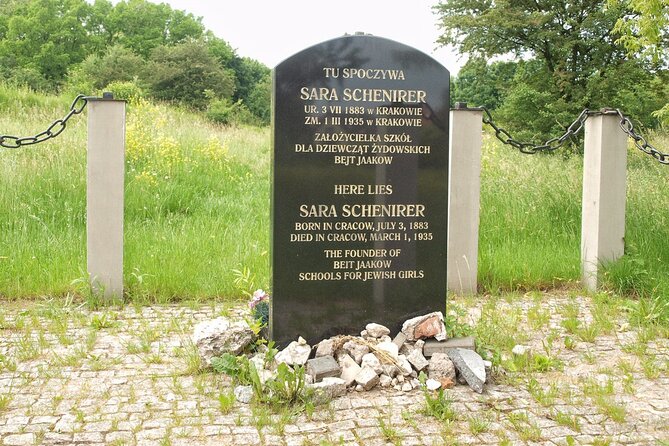
The large memorial at Płaszów was erected in 1964 to honor all the victims. Smaller memorials mark additional parts of the site. These markers are important because they give the open area a few fixed points of remembrance.
You may find the visit emotionally quieter than a museum tour. There are no crowded exhibition rooms or large displays guiding you from one event to the next. Instead, you walk through a place where much of the evidence has vanished.
That makes the guide’s words especially important. I would pay close attention to dates, place names, and explanations of how the camp related to the ghetto. It is easy to blend together the different stages of Kraków’s wartime history. A good guide helps you keep the sequence straight.
The outdoor setting also affects comfort. The information supplied does not describe paved paths, seating, toilets, or shelter. Since the visit takes place among hills, fields, and wooded areas, practical footwear is sensible. The 3:00 pm start gives you an afternoon visit, but weather can still affect how comfortable you feel outside.
A few more in Krakow
- Krakow–Zakopane: Cable Car, Chocholow Baths, Cheese & Vodka
★ 5.0 · 10,720 reviews - Krakow: Auschwitz-Birkenau Guided Tour with Pickup & Lunch
★ 4.5 · 9,800 reviews - From Krakow: Wieliczka Salt Mine Tour
★ 4.6 · 9,393 reviews - Krakow: Auschwitz-Birkenau Guided Tour Pickup/Lunch Options
★ 4.5 · 9,057 reviews
Seeing the Schindler’s List connection
Płaszów is closely linked with Schindler’s List, Steven Spielberg’s 1993 film about Oskar Schindler. The film showed the camp and the lives of people caught within its system of persecution.
The actual Płaszów area is now a nature preserve. Because filming could not take place there, Spielberg’s production built a replica of the camp in the nearby Liban Quarry, about a hundred meters away. The tour visits this replica area as well as the former camp and memorials.
This is one of the more unusual elements of the experience. You are not simply visiting a film location. You are comparing three layers of place: the historical camp, the present-day memorial area, and the nearby quarry used to recreate the camp for the movie.
The film connection may draw you to the tour, but it should not be the only reason to book. The real value lies in learning how cinema interpreted the history and how the physical setting has changed. If you have seen Schindler’s List, the quarry can help you recognize some of the visual choices. If you have not seen it, the tour still works as a history visit.
Finishing at the surviving ghetto wall
After Płaszów, the route passes the remaining fragment of Kraków’s ghetto wall. This is a 12-meter stretch of the original wall and one of the clearest physical reminders of the ghetto still visible in the city.
A commemorative plaque was added in 1983. Its message, presented in Hebrew and Polish, remembers the people who lived, suffered, and died under German persecution, and the journey that began there toward the death camps.
The wall is modest in size, but that is part of its power. You are not looking at an entire fortification or a large preserved complex. You are looking at a surviving piece of the boundary that once controlled where people could live.
The end point is listed as Henryka Kamieńskiego 57, at a bus stop on Kamienskiego Street. This is useful to know before you set out, because the tour does not return you to the original meeting point. You finish in a different part of Kraków and can continue from there by public transport.
What the $23.27 price delivers
At about $23.27 per person, this is fairly priced for a two-hour guided history walk, especially if the guide explains the sites as carefully as the available feedback suggests. The cost covers the professional guide, and the group size is capped at 15 people.
The price is not buying admission to a large museum or a formal exhibit. It is paying for interpretation. That matters at Płaszów, where the physical remains are limited and the historical meaning is not always obvious.
You should add the 3.4 PLN tram ticket to your budget. The ticket is not included. The tour information identifies the meeting and end points, but it does not provide a full transport breakdown, so check the route details at booking and allow enough time to reach Plac Bohaterów Getta before 3:00 pm.
Free cancellation is available if you cancel at least 24 hours before the start time. Changes or cancellations inside that window are not accepted for a refund. That policy is reasonable, but pay attention to the local time shown for the tour.
Who will get the most from this tour
I would recommend this experience to you if you want to understand Kraków’s Holocaust history beyond the most famous museum stops. It suits people who prefer a guide’s explanation to reading plaques alone, and it works well for those interested in the connection between real places and Schindler’s List.
It is also a good choice if you have already visited Auschwitz and want to learn about a site directly tied to Kraków. Płaszów is not a substitute for Auschwitz, and the tour does not pretend to be one. It tells a more local story, rooted in the city’s ghetto and the nearby camp.
You may want a different experience if you need extensive preserved structures, indoor exhibits, or a highly visual presentation. The former camp is open and partly overgrown, and much of the visit depends on listening and imagining the past from the surviving memorials.
The tour is suitable for most people, according to the supplied participation information. Still, I would treat it as a walking visit on uneven outdoor ground, because the site consists of hills, fields, and wooded sections. The listing does not provide detailed accessibility information, so ask the operator before booking if you have mobility concerns.
A practical plan for the afternoon
Meet at Apteka pod Orłem, Plac Bohaterów Getta 18, before the 3:00 pm start. Give yourself time to find the square and identify the meeting point without rushing through the memorial space.
Wear shoes suited to outdoor walking. Bring water and clothing suitable for the weather, since the main historical site is not an indoor attraction. The tour information does not specify how much shelter or seating is available.
Keep the group limit in mind. Up to 15 people is small enough for a personal feel, but the pace may still involve moving between several sites. Listen for the guide’s instructions, particularly when crossing between the square, Płaszów, the quarry, and the final wall fragment.
At the end, you will be near the bus stop at 57 Kamienskiego Street rather than back at Plac Bohaterów Getta. Plan your next stop from there. The finish is practical for continuing through Kraków, but it is worth knowing in advance so you do not expect a return transfer.
Should you book the Płaszów camp tour?
I would book this tour if you want a focused, affordable introduction to the Kraków ghetto and Płaszów camp. The combination of Ghetto Heroes Square, the open camp site, the 1964 memorial, the Liban Quarry replica, and the surviving wall gives you more context than a visit to any one point alone.
The strongest reason to book is the guide. The available feedback describes an exceptionally clear and personable guide who made the afternoon easy to follow. Since Płaszów has few obvious remains, that ability to explain the site is not a minor extra. It is the service you are paying for.
Book it with realistic expectations. This is a quiet outdoor history walk, not a preserved camp museum. If that sounds like the right way for you to approach Kraków’s wartime past, the $23.27 price offers solid value. Add the small tram fare, wear practical shoes, and leave the afternoon open for a thoughtful visit rather than a quick photo stop.
FAQ
How long is the Płaszów concentration camp tour?
The tour lasts approximately two hours.
Where does the tour begin?
It begins at Apteka pod Orłem, Plac Bohaterów Getta 18, 33-332 Kraków, Poland.
What time does the tour start?
The stated start time is 3:00 pm.
Where does the tour finish?
It finishes at Henryka Kamieńskiego 57, 30-644 Kraków, at a bus stop on Kamienskiego Street.
Is transportation included?
A tram ticket is not included. The stated cost is 3.4 PLN.
What sites are included?
The route includes Ghetto Heroes Square, the former Płaszów concentration camp, the large 1964 memorial and smaller memorials, the Liban Quarry replica associated with Schindler’s List, and a surviving fragment of the Kraków ghetto wall.
How many people can join the tour?
The tour has a maximum group size of 15 people.
Can I cancel for a full refund?
Yes. You can cancel for a full refund if you do so at least 24 hours before the experience start time. Cancellations or changes made less than 24 hours before the start are not accepted for a refund.
Just added in Krakow
- Auschwitz-Birkenau – Skip the Line Tickets★ 3.5 · 29 reviews
- Auschwitz-Birkenau: Fast-Track Ticket & Guided Tour No Transfers★ 3.5 · 17 reviews
- Zakopane & Sleigh Ride with Bonfire – Group Tour from Kraków★ 5.0 · 2 reviews
- Sleigh Ride & Bonfire in Zakopane with Funicular – Private Trip★ 5.0 · 48 reviews
- Thermal Baths & Zakopane – Private Trip from Krakow★ 5.0 · 1 review
- Zakopane & Gubalowka Funicular – Private Winter Tour from Krakow★ 5.0 · 10 reviews
- Divine Mercy Sanctuary – Private Tour from Krakow★ 5.0 · 4 reviews
- stag dog chase Krakow prank★ 5.0 · 4 reviews